Breaking Down Payout Percentages for Multi-Hand Video Poker Options
Zara Ludwig · Jul 16, 2026
Breaking Down Payout Percentages for Multi-Hand Video Poker Options
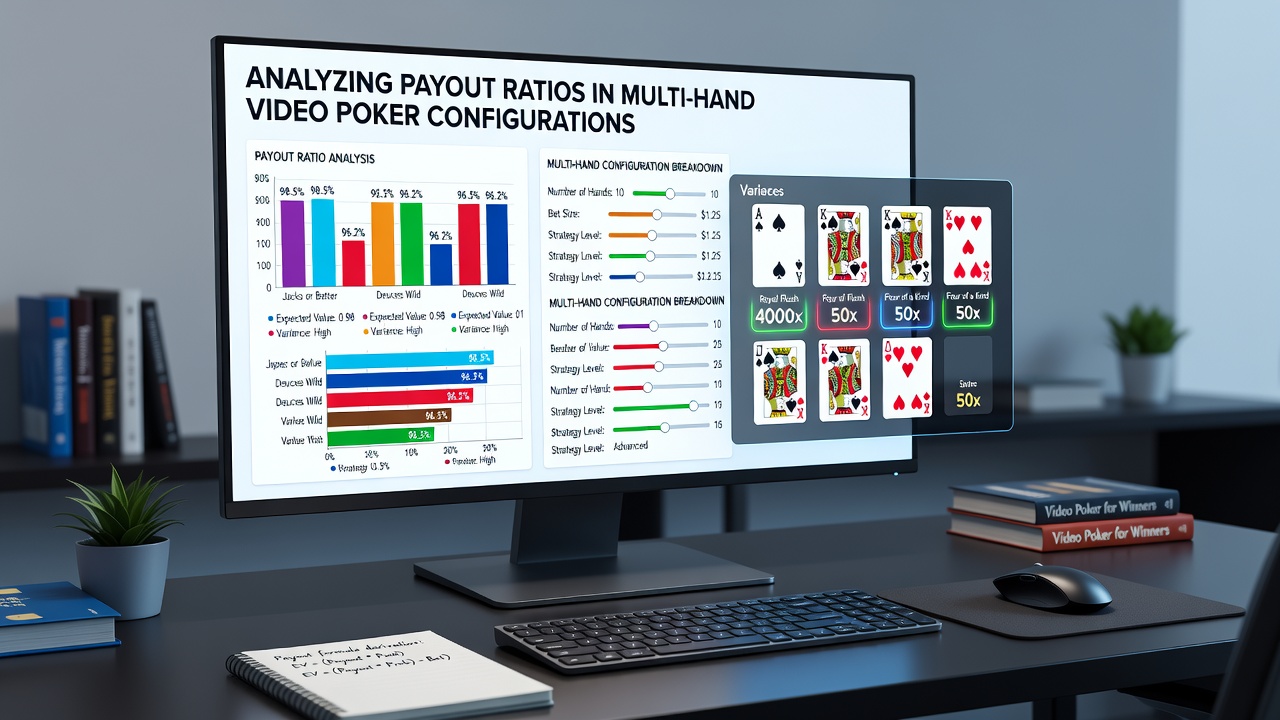
Multi-hand video poker setups let players handle several hands at once from a single deal, and this structure changes how payout percentages work compared to standard single-hand versions. Observers note that the core mechanics stay rooted in the same deck probabilities, yet the way bets distribute across hands influences overall return rates in measurable ways.
Core Mechanics of Multi-Hand Configurations
Players select the number of hands, often ranging from three to one hundred in modern machines, and each additional hand multiplies the initial wager while drawing from a shared deck. Researchers have tracked how this multiplication affects expected returns because every hand resolves independently after the draw phase, though the initial cards remain identical across all positions. Data from gaming laboratories shows that paytables adjust in many titles to account for the increased volume, preventing the house edge from shrinking too far when volume rises.
Standard Jacks or Better paytables appear frequently in these games, but operators modify the payouts for straights, flushes, adn full houses depending on the hand count selected. Those adjustments keep the theoretical return to player within a narrow band, typically between 95 and 99 percent when optimal strategy applies, according to figures released by the Nevada Gaming Control Board.
How Hand Count Alters Return Calculations
Calculations for return to player rely on exhaustive enumeration of all possible draws from the remaining deck. In a three-hand game the same five-card starting hand appears three times, and each position receives its own replacement cards. Mathematicians at university gaming research centers have demonstrated that variance climbs with more hands because wins and losses scale linearly with the multiplier, while the probability distribution for any single hand stays constant.
Five-hand and ten-hand machines follow the same principle yet require tighter paytable compression to offset the higher total bet. Evidence from independent testing agencies indicates that a machine offering 99 percent return in single-hand mode often drops to 97.5 percent or lower once configured for fifty hands, unless the operator preserves the original paytable values. Operators therefore publish distinct paytables for each configuration so players can compare expected returns before committing credits.
Paytable Variations Across Popular Titles
Games such as Double Double Bonus Poker and Deuces Wild receive multi-hand treatment in many casinos, and each variant carries its own set of adjusted payout schedules. Analysts have compiled databases showing that bonus payouts for four-of-a-kind combinations sometimes increase slightly in multi-hand mode to maintain player interest, while lower-ranking hands receive modest reductions. These trade-offs keep the overall return percentage stable while shifting the frequency of smaller wins.
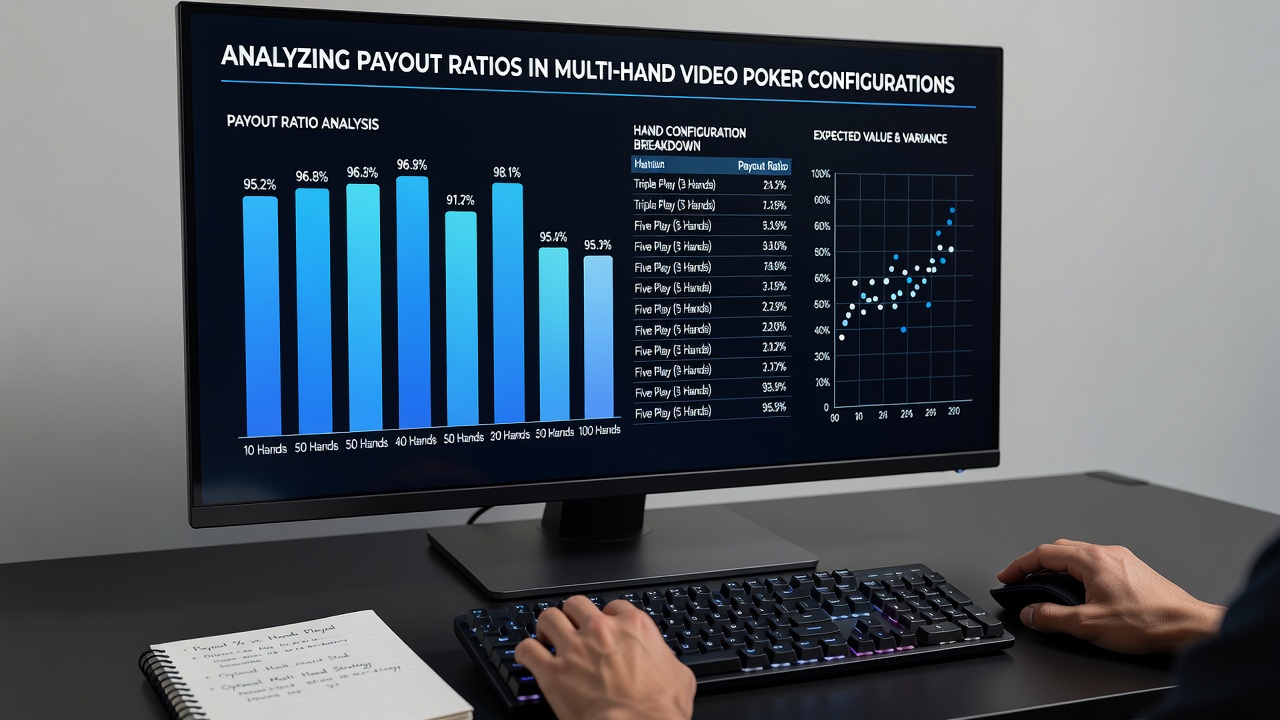
One study released by the University of Nevada, Las Vegas examined thousands of multi-hand sessions and found that optimal play still yields the advertised return when players follow published strategy charts tailored to the exact paytable. Deviations from those charts produce measurable drops in return, often exceeding two percentage points across extended play. Regulatory bodies in New Jersey and several Canadian provinces now require operators to display the return percentage for every available hand-count option on the game screen itself.
Impact of Regulatory Updates Expected in 2026
Industry reports project that new technical standards scheduled for implementation in July 2026 will require clearer disclosure of how hand-count multipliers interact with paytables. Gaming authorities in multiple jurisdictions have signaled they will mandate side-by-side comparison tables so players can see the effect of choosing ten hands versus one hundred hands on the same machine. Such requirements build on existing rules already enforced in Australia and several European markets where return percentages must appear in the help menu for every configuration.
Testing laboratories have begun updating their certification protocols to verify that random number generators treat each hand position as an independent draw once the initial deal completes. This verification step ensures that the theoretical return percentages published by manufacturers match actual game performance across all hand counts offered.
Practical Analysis Methods for Players
Those examining machines can calculate approximate returns by multiplying the single-hand expected value by the number of hands and then dividing by the total credits wagered. The resulting figure remains consistent provided the paytable stays fixed. When paytables change, however, the calculation must incorporate the new award values for each ranked hand. Several publicly available strategy engines allow users to input custom paytables and receive precise return percentages for any hand count.
Bankroll management considerations differ because higher hand counts increase the size of individual bets and therefore accelerate both wins and losses. Data compiled by independent research groups shows that session length tends to shorten in one-hundred-hand modes even though the underlying return percentage may match a lower-count option. Players who review the paytable before selecting a configuration can align their choice with personal risk tolerance without relying on subjective impressions.
Conclusion
Multi-hand video poker payout ratios depend on the interplay between hand count, paytable structure, and optimal strategy. Published data from regulatory agencies and academic sources confirm that return percentages remain predictable when players examine the specific paytable attached to each configuration. Continued regulatory refinements scheduled for 2026 will likely increase transparency around these calculations, giving users clearer information for decision-making across different machines and jurisdictions.