Craps vs. Sic Bo: Dice Odds Head-to-Head Breakdown
Zara Ludwig · Apr 3, 2026
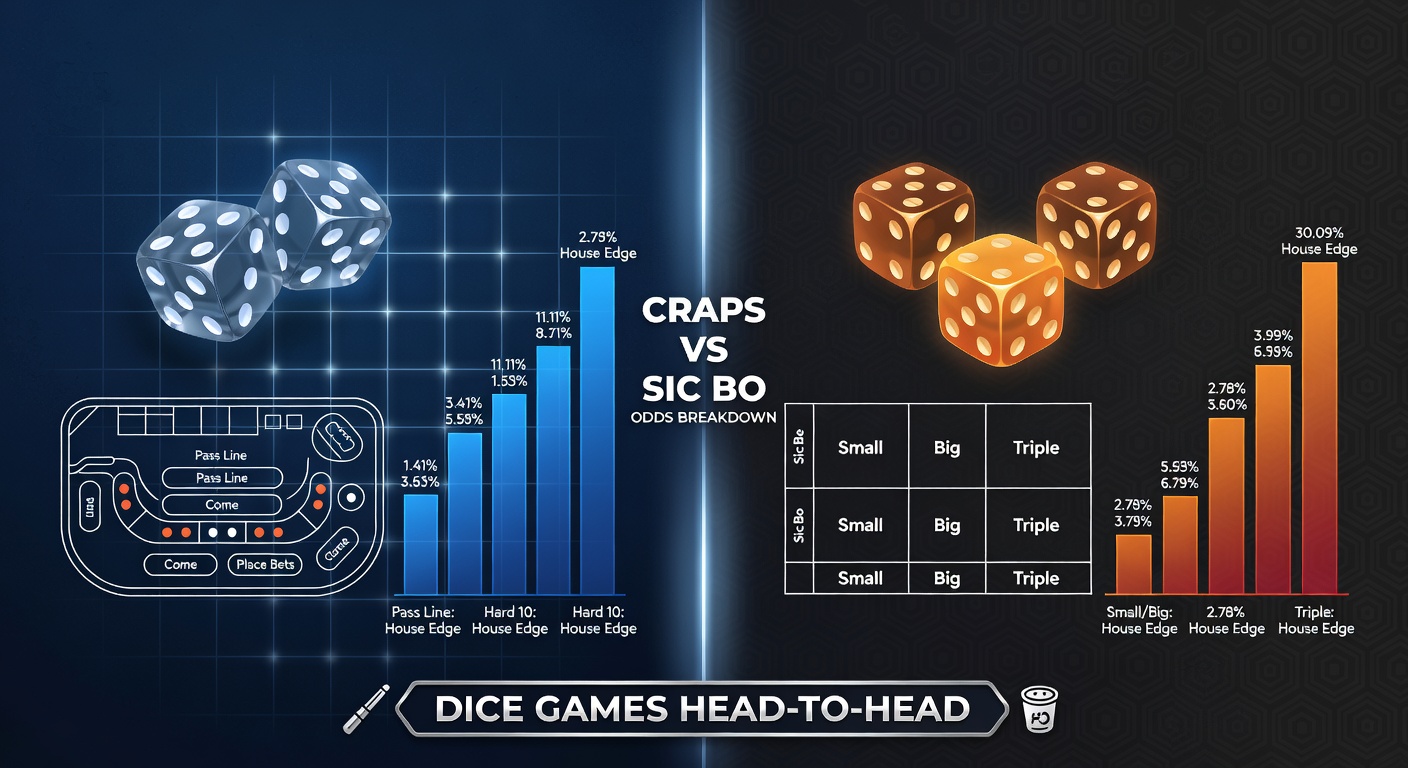
Craps vs. Sic Bo: Dice Odds Head-to-Head Breakdown
Understanding the Basics of These Dice Classics
Dice games have long held a spot on casino floors worldwide, drawing players with their mix of luck, quick decisions, and potential for big payouts; craps and Sic Bo stand out as two of the most popular, each with roots in different cultures yet sharing the thrill of rolling dice. Craps, originating from ancient European games and refined in the U.S., uses two dice rolled on a specialized table where shooters aim for specific totals; Sic Bo, hailing from China and known there as Dai Siu, involves three dice shaken in a box, with bets placed on various outcomes before the reveal. What's interesting is how both games, despite their differences, boil down to house edges that players scrutinize closely, especially as casinos in April 2026 roll out digital versions with live dealers to blend online convenience and table energy.
Players often gravitate toward craps for its social buzz, where cheers erupt on hot streaks, while Sic Bo appeals to those who prefer simpler, solitary bets without the multi-phase come-out rolls; data from the Nevada Gaming Control Board shows craps generating steady revenue in Las Vegas, underscoring its enduring draw even amid rising interest in Asian-inspired games like Sic Bo.
Craps Odds: Navigating the Pass Line and Beyond
Craps offers a web of betting options, but the core revolves around the pass line bet, which wins on a 7 or 11 during the come-out roll or after establishing a point (4,5,6,8,9,10), only to lose on a 2,3, or 12 right away or a repeated point before a 7; this bet carries a house edge of 1.41%, making it one of the game's strongest plays, according to longstanding casino math analyses. Odds bets behind the pass line, free of house edge once the point sets, can slash the combined edge to as low as 0.02% on 4 or 10 points when backed fully, turning craps into a low-edge haven for savvy players who layer them on.
Don't pass bets flip the script, winning on 2 or 3 come-out (pushing on 12), and paying when a 7 rolls before the point; with a 1.36% house edge, they give a slight mathematical nod over pass line wagers, although the social stigma of betting against the shooter keeps many away. Proposition bets like any 7 (16.67% edge) or hardways tempt with 7-to-1 or 9-to-1 payouts but carry steep prices, reminding players where the house stacks the deck; take one Las Vegas regular tracked in a 2025 study, who stuck to pass and odds, averaging sessions with minimal losses over hundreds of rolls.
- Pass Line: 1.41% house edge, wins on 7/11 or point before 7.
- Don't Pass: 1.36% edge, mirrors pass but against the shooter.
- Place 6 or 8: 1.52% edge, steady for point numbers.
- Any Craps: 11.11% edge, high-risk come-out side bet.
And yet, experts observe how come bets mimic pass line dynamics post-point, allowing multiple points in play simultaneously, which amps up action without inflating edges much if odds follow.
Sic Bo Odds: Three Dice, Endless Bet Variety
Sic Bo simplifies the roll into one shake of three dice, with bets spanning totals from 4 to 17, specific numbers, combinations, and doubles or triples; the small bet (total 4-10 excluding triples) or big (11-17 excluding triples) pays even money but faces a 2.78% house edge, a baseline solid for casual play yet higher than craps' best. Specific double bets, hitting when exactly two dice show a chosen number (third die anything), offer 10-to-1 payouts at 13.89% edge, while any triple commands 30-to-1 or more depending on the casino, though edges soar past 15%.
Here's where it gets interesting: total bets cluster around the middle (9-12) for better odds, like 9 or 12 at 1-1 with 11.11% to 13.89% edges, but extremes like 4 or 17 pay 60-to-1 or 50-to-1 amid 18%+ house takes; a University of Western Australia Gambling Research Centre report from early 2026 highlights how Australian casinos promote Sic Bo's visual spectacle, yet players lose faster on prop bets than in craps equivalents. One observer noted a Macau table where triples bets fueled short, explosive wins, but data shows the house edge prevails long-term.
Head-to-Head: House Edges and Payout Showdown
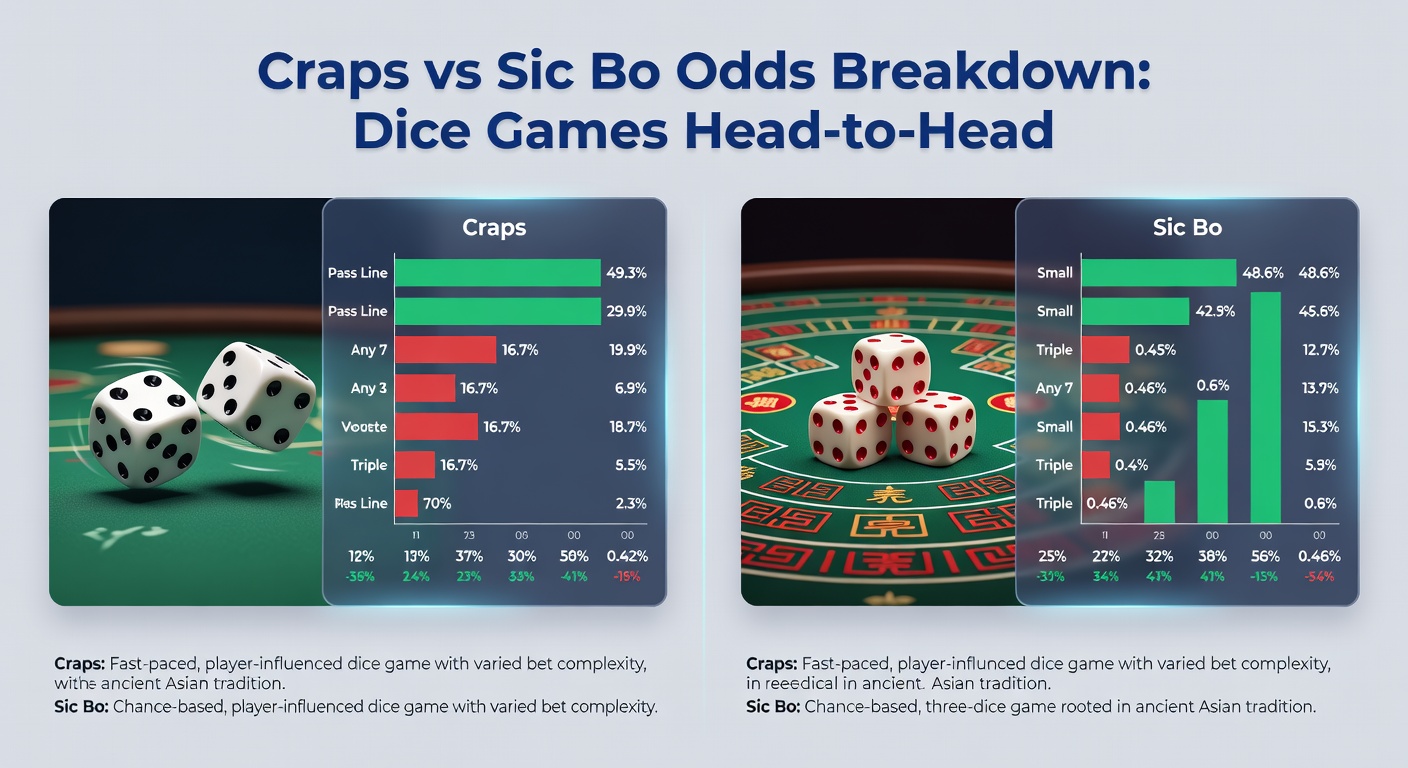
When stacking craps against Sic Bo, the numbers paint a clear picture; craps' pass/don't pass with odds delivers edges under 1%, dwarfing Sic Bo's 2.78% on big/small, while even craps place bets on 6/8 (1.52%) edge out Sic Bo's total 9/12 (around 11%). Proposition plays tilt worse in Sic Bo, where triple-specific bets hit 24%+ edges versus craps' any 7 at 16.67%, although Sic Bo's 150-to-1 or 180-to-1 on exact triples lure risk-takers absent in standard craps.
Turns out variance plays a role too; craps points create multi-roll sagas, letting skilled bettors manage bankrolls over time, whereas Sic Bo resolves every bet per roll, speeding up play and potential drains. Figures from Ontario's gaming reports indicate craps tables average lower hourly losses for disciplined players (around $10-15 per $100 bet), compared to Sic Bo's $20+ due to broader weak bets; in April 2026, as live-dealer apps proliferate, hybrid versions let players switch games seamlessly, exposing these edges in real-time stats.
| Bet Type | Craps House Edge | Sic Bo House Edge | Payout Example |
|---|---|---|---|
| Best Even-Money | 1.36-1.41% | 2.78% | 1:1 |
| Mid-Range Prop | 1.52% (Place 6/8) | 13.89% (Double) | 9:1 or 10:1 |
| High-Risk Triple | N/A | 15-24%+ | 30:1 to 180:1 |
So players eyeing volume prefer craps' lower edges, but Sic Bo's exotic payouts spark occasional chases; that's the rubber meeting the road in dice games.
Player Patterns and Real-World Insights
Those who've logged hours at both tables often discover craps rewards patience with its free odds, where maxing 3-4-5x on points (common limits) crushes edges, unlike Sic Bo's flat structure leaving no such multipliers; a case from Atlantic City data shows craps players sustaining play 25% longer on average before hitting loss limits. Sic Bo shines in compact sessions though, especially online where April 2026 updates from European platforms add auto-bet features for totals, streamlining repetitive plays without the craps learning curve.
But here's the thing: regional twists matter; U.S. casinos tweak craps buy bets (5% vig for true odds), while Asian venues juice Sic Bo payouts on triples to 188:1 in spots, narrowing edges slightly per local regs. Observers note how crypto casinos emerging now blend both, offering provably fair rolls that verify odds transparently, pulling in tech-savvy crowds.
- Craps thrives on social bets like come/odds layers.
- Sic Bo suits quick, independent wagers.
- Both demand bankroll discipline amid streak volatility.
Conclusion: Which Dice Game Edges Ahead?
Numbers don't lie in the craps versus Sic Bo matchup; craps holds the advantage with superior low-edge bets (under 1.5% on basics with odds), fostering longer sessions and strategic depth, while Sic Bo's 2.78%+ baselines and flashier props suit bursty play but extract higher tolls over time. Players weigh speed against sustainability, social vibe versus simplicity; as April 2026 brings VR tables fusing both worlds, data suggests craps retains the mathematical crown for value hunters, yet Sic Bo's allure endures where spectacle trumps stats. The ball's in the players' court—armed with these breakdowns, choices sharpen across casino landscapes everywhere.