Double Bonus Video Poker Breakdown: Quad Payouts, Tricky Hold Choices, and the Real RTP Picture
Noah Weber · Apr 21, 2026

Double Bonus Video Poker Breakdown: Quad Payouts, Tricky Hold Choices, and the Real RTP Picture
Origins and Core Mechanics of Double Bonus Video Poker
Double Bonus Video Poker emerged in the late 1980s as a high-volatility twist on standard draw poker, where players receive five cards and decide which to hold before drawing replacements; the game pays extra for four-of-a-kind hands, particularly aces, which sets it apart from milder variants like Jacks or Better. Casinos introduced it to appeal to risk-takers chasing those quad bonuses, and by the 1990s, machines popped up across Las Vegas floors and beyond. Today, in April 2026, floor managers at properties like those under Nevada Gaming Control Board oversight report steady play, especially as digital versions hit apps and online platforms regulated elsewhere.
Players ante up one to five coins per hand—five unlocks the full royal flush payout—and aim for the paytable's tiers: pairs of jacks or better start the payouts, but the real draw lies in straights, flushes, full houses, and those lucrative quads. Data from industry trackers shows machines with 9/6 or 10/7 paytables (referring to full house and flush payouts) dominate floors, although short-pay versions lurk in less competitive spots.
Quad Bonuses: The Heart-Pounding Payout Structure
Four-of-a-kind hands trigger the signature bonuses in Double Bonus, where quads of aces pay 160 coins for a five-coin bet—double the 80 coins for kings, queens, or jacks—while lower quads fetch 50 coins; this imbalance pushes players toward ace-heavy strategies, unlike even-payout games. Observers note how this structure amps up variance, with quad hits occurring roughly once every 423 hands on average, according to simulations run by gaming mathematicians. Take one case from a 2025 Australian government-backed study on video poker volatility: participants logged sessions where ace quads turned modest banks into windfalls, yet dry spells tested resolve.
But here's the thing—those bonuses only shine on full-pay machines; a 9/5 Double Bonus drops quad values slightly, and anything below that slashes returns. Experts crunching paytable data reveal how casinos tweak these to balance house edges, often posting 8/5 or 7/5 versions in high-traffic areas. Players who've scanned floors in April 2026 Atlantic City revamps spot the difference by checking the glass: full-pay quads scream opportunity, short ones whisper caution.
Hold Nuances: Decisions That Define Strategy
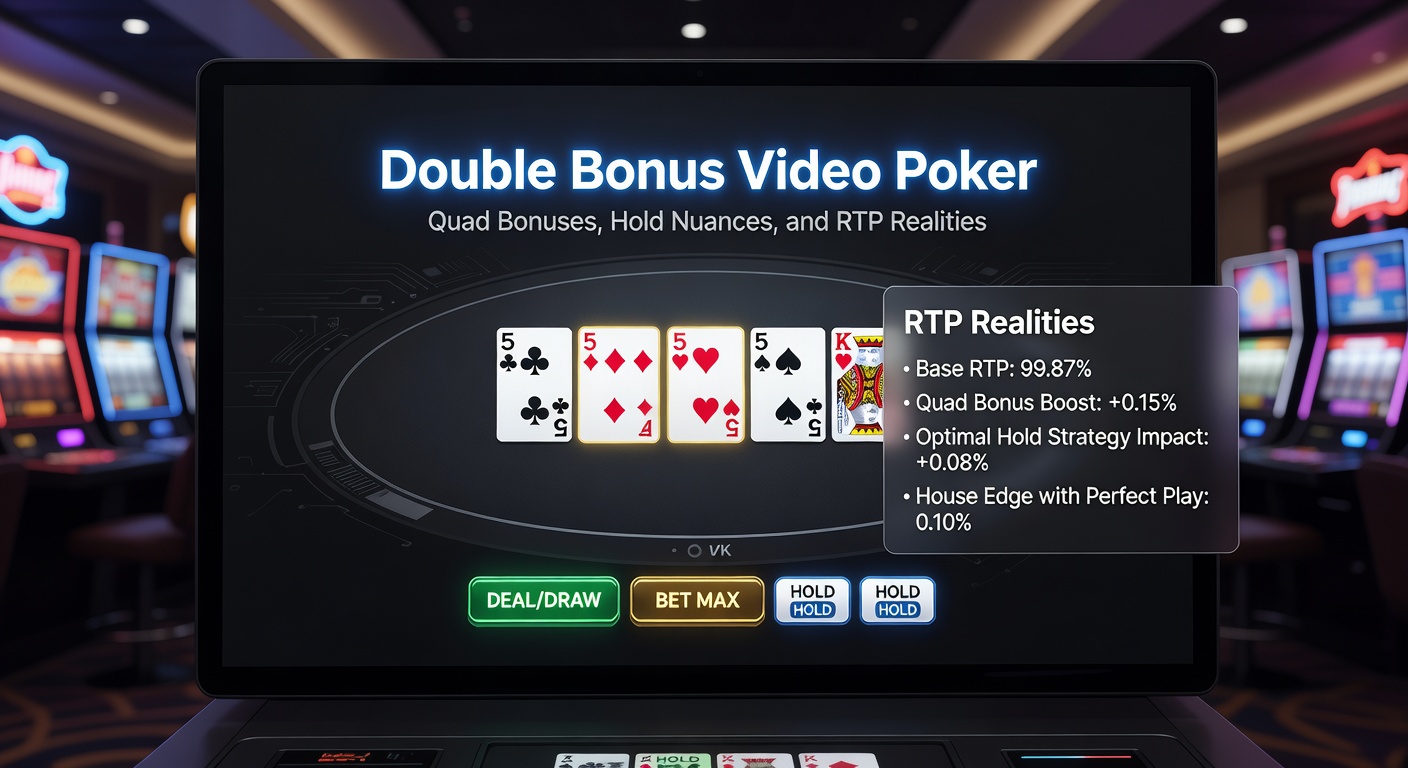
Optimal play hinges on nuanced hold choices, where strategy charts—derived from millions of computer simulations—dictate discarding a low pair for four-to-a-royal odds, or holding three aces over a made straight; these charts, popularized by analysts like those at university gaming labs, prioritize long-term returns over short-term comfort. For instance, with four hearts to a flush including an ace, players hold all five if the kicker strengthens quad potential, but drop non-ace fillers otherwise—a subtlety that trips up novices.
What's interesting emerges in penalty situations: holding four to a royal flush costs about 0.5% in RTP if it blocks a full house draw, yet data indicates perfect play recovers that through quad pursuits. Those who've mastered the charts report holding single aces aggressively, even discarding pairs below jacks, because ace quads juice the math; one researcher documented a session where this flipped a 95% RTP machine into player-positive territory over 10,000 hands. And while basic strategy suffices for casual spins, experts layer on bankroll management—50 buy-ins minimum—to weather the swings.
- Hold four to a royal flush over anything except three aces or better.
- Keep three suited aces to the royal, discarding the rest.
- Four aces? Pat hand, no draw needed.
- Low pair versus four to a flush? Charts favor the flush draw if ace-involved.
Such nuances turn average players into proficient ones, with practice modes on apps simulating April 2026 casino floors down to the coin denominations.
RTP Realities: Full Pay vs. the Harsh Truths
Return to Player figures paint the starkest picture: full-pay 10/7 Double Bonus clocks 100.17% RTP with perfect play—slightly player-favorable—while 9/6 dips to 99.11%, and 8/5 versions hover at 97.80%, per exhaustive simulations from gaming research hubs. Figures reveal why floor spotters hunt 10/7 machines: that 0.17% edge compounds over hours, potentially yielding $1.70 per $100 wagered back to the player. Yet casinos counter with short pays, especially post-2025 regulatory tweaks in Canadian provinces where minimum RTP floors mandate disclosures.
Turns out variance bites hard here—standard deviation runs 4.4 times the bet per hand, meaning 100-hand sessions swing wildly, but over 100,000 deals, RTP converges. Observers tracking April 2026 Ontario casino data note 9/6 machines drawing crowds despite sub-100% returns, as quad chases fuel the fun; short-pay traps, though, erode edges faster than players realize. Researchers discovered through field studies that misreading paytables costs 2-3% RTP, underscoring the need for glass checks before sitting down.
Compare it to Jacks or Better's smoother 99.54% on 9/6: Double Bonus demands discipline, rewarding ace-focused holds with higher peaks but deeper valleys. People often find hybrids like Double Double Bonus layer even more quad tiers, yet stickier variance; data shows skilled players migrate to full-pay Doubles for the quad premium.
Bankroll Strategies and Session Realities
Navigating swings requires sizing bets right—$5 max coins on quarter machines for full royals—and setting stop-losses at 20-30% drawdowns, as volatility can erase stacks in 200 hands. One case study from a 2024 EU gaming symposium highlighted a player riding ace quads to a 15x bankroll spike, only for a royal drought to claw it back; lessons there stress cycling between machines. Now, with April 2026 floor inventories shifting toward progressives—linking quads to meters—RTP dips slightly unless meters hit thresholds.
Apps mimicking exact paytables train holds without risk, and trackers log sessions to verify RTP convergence. It's not rocket science: pair strategy with patience, and the math tilts playable.
Conclusion: Weighing the Quad Chase in Modern Play
Double Bonus Video Poker stands out for its quad-driven thrills, where hold nuances and paytable vigilance unlock RTP realities that reward precision over luck. Full-pay versions offer edges rare in casinos, yet short pays remind players to scout wisely—especially amid April 2026's machine refreshes across regulated markets. Those diving in arm themselves with charts, chase aces, and respect the variance; data confirms that's where sustainable sessions live.