Proposition Bets in Craps: Unpacking Payouts, Probabilities, and Smart Placement Choices
David Schulz · Mar 16, 2026
Proposition Bets in Craps: Unpacking Payouts, Probabilities, and Smart Placement Choices
Understanding Proposition Bets on the Craps Table
Proposition bets, often called prop bets, sit right in the middle of the craps layout, drawing players who chase quick thrills with one-roll resolutions; these wagers resolve on the very next dice roll, unlike pass line bets that stretch across multiple throws, and they offer high payouts that tempt even seasoned shooters. Data from casino floor observations reveals players frequently cluster around this central zone during hot streaks, placing chips on specifics like the next seven or eleven, while the house maintains a firm grip through built-in edges. Experts who've analyzed thousands of rolls note how these bets fuel the game's excitement, yet their one-and-done nature amplifies volatility; turns out, grasping their mechanics separates casual rollers from those who weigh odds carefully.
Craps itself unfolds in phases—the come-out roll sets the point, followed by point-establishing throws—but prop bets ignore all that structure, betting purely on immediate outcomes like totals of 2, 3, 11, or 12, or exact combinations such as hard sixes; this simplicity appeals to newcomers, although long-term figures from Wizard of Odds simulations underscore their riskier profile compared to line bets. And here's where it gets interesting: as casinos evolve layouts for electronic aids in March 2026, prop sections remain unchanged, preserving that tactile chip-stacking ritual amid digital side bets elsewhere.
Breaking Down Common Prop Bets and Their Payouts
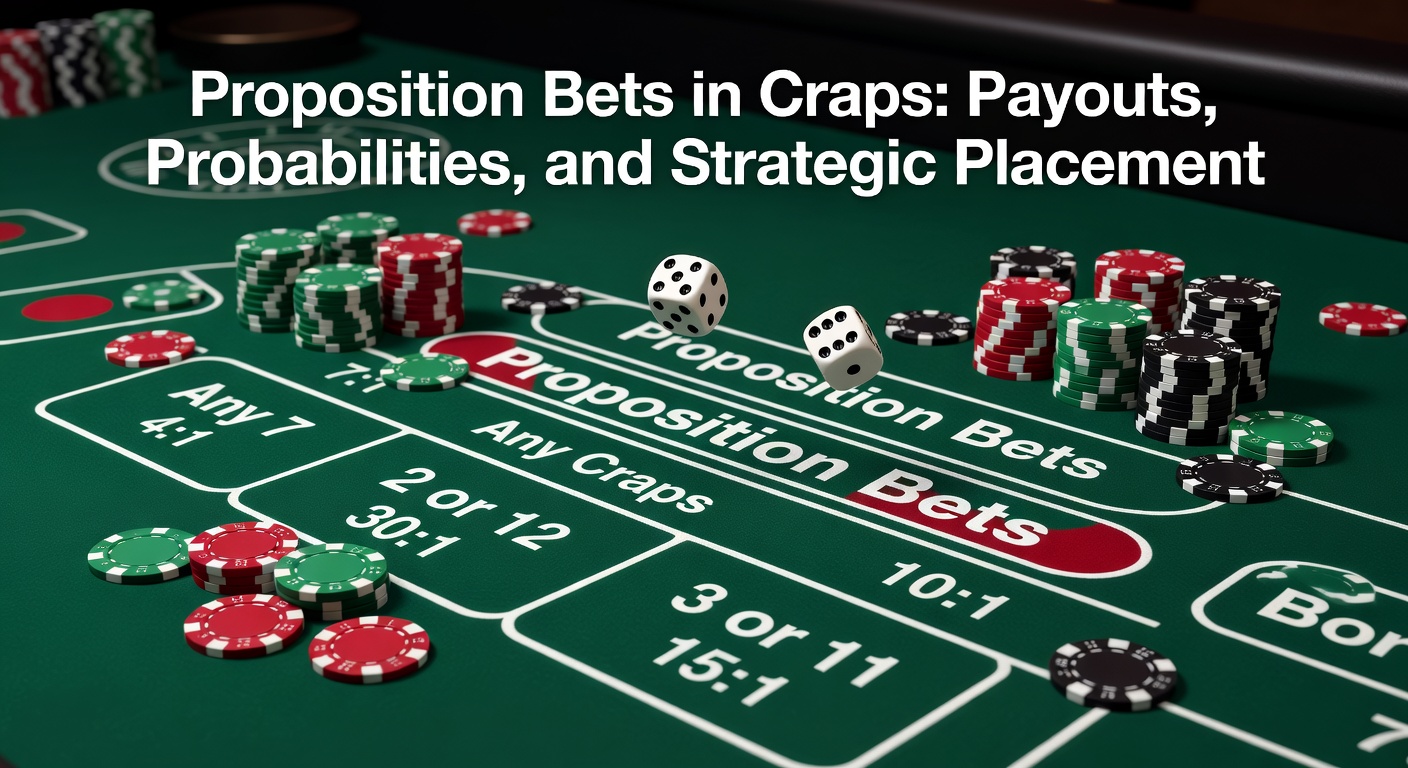
Any Seven tops the list at 4-to-1 odds, paying $4 for every $1 bet when the shooter rolls a seven on the next toss—a frequent enough outcome at one in six chances—yet its popularity stems from that accessibility, with players yelling "Yo eleven" nearby for 15-to-1 rewards on an 11; Craps 2 or 12 offers 30-to-1, while Any Craps (2, 3, or 12) settles at 7-to-1, blending those low-probability losers into one package. Hardways add nuance, demanding doubles like 4-4 for Hard 4 at 7-to-1 or 3-3 for Hard 6 at 9-to-1, rejecting easy ways that resolve quicker but pay less elsewhere; the Horn bet combines them cleverly—one unit each on 2, 3, 11, 12—for a potential 30-to-1 windfall on horns (2 or 12) or 15-to-1 on 3 or 11.
- Any Seven: 4:1 payout, resolves on 6-1, 5-2, 4-3 combinations.
- Yo Eleven: 15:1, strictly 5-6 or 6-5.
- Any Craps: 7:1 across 1-1, 1-2, 2-1, 6-6.
- Hard 4 (1-3 or 3-1 no more): 7:1.
- Hard 6 (3-3): 9:1; Hard 8 (4-4): 9:1; Hard 10 (5-5): 9:1.
- Horn High variations push payouts higher by weighting units toward favored numbers.
Figures from the Nevada Gaming Control Board annual reports confirm these payouts standardize across Strip and downtown venues, rarely deviating since rules solidified decades ago; that's notable because while slots and video poker tweak returns seasonally, craps props stay rock-solid, giving players consistent math to crunch.
Probabilities Behind the Payouts and House Edges Exposed
With 36 possible dice combinations, Any Seven hits six ways—making its 1/6 probability straightforward—yet the 4:1 payout leaves a 16.67% house edge, meaning for every $100 wagered, the casino pockets $16.67 over time; Yo Eleven lands once (1/36), earning 15:1 but carrying an 11.11% edge, while Any Craps covers four ways (1/9) at 7:1 for another 11.11% disadvantage. Hardways fare worse: Hard 4 or 10 at three ways each (1/36 for doubles, but total prob 3/36) yield 9-10% edges on 7-9:1 pays, since easy ways steal resolution chances; researchers at UNLV's Center for Gaming Research crunched billions of simulated rolls, revealing these edges dwarf the 1.41% on pass lines, turning props into house feasts during extended play.
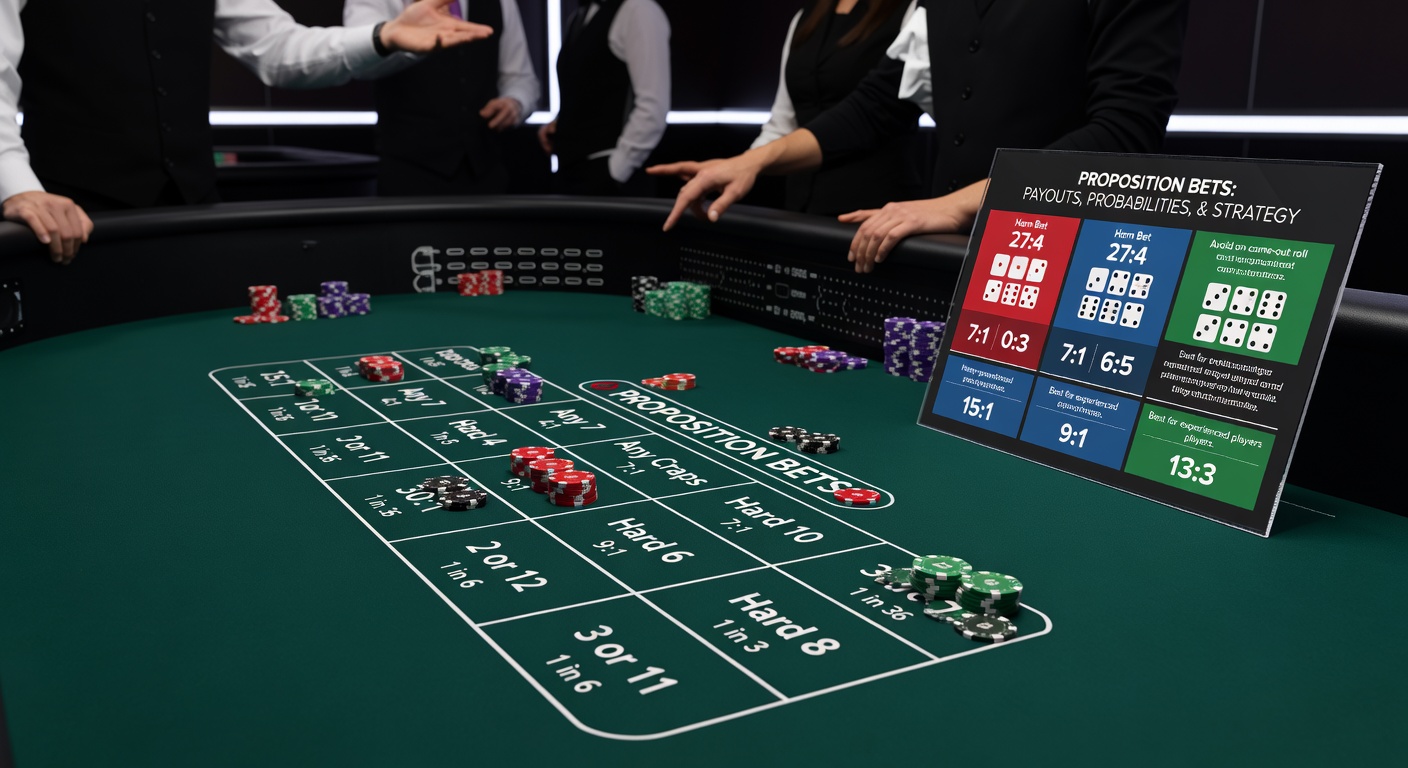
But here's the thing: variance swings wildly—one hot roller in Atlantic City reportedly parlayed $5 Any Sevens into $1,200 during a single streak last year—although probability grinds down such luck; studies from the American Gaming Association highlight how prop volume spikes in high-limit rooms, where whales chase those edges despite the math. What's significant is how these probs tie directly to dice physics—fair six-sided cubes ensure 1-6 uniformity—yet biased wear rarely factors in regulated play.
Strategic Placement: Timing and Table Dynamics
Players often place props post-point establishment, hedging pass lines with Any Craps during seven-out threats, or layering Hardways when shooters favor controlled tosses; observers note mid-roll clusters around cold tables, where dealers call "No seven!" less, boosting Yo bets briefly. Data indicates strategic folks limit props to 5-10% of bankroll, positioning chips precisely—center for Any Seven, edges for hardways—to snag dealer nods without confusion; and while come-out rolls suit Field bets nearby (not pure prop), transitioning to props shines on repetition-heavy points like 6 or 8, where hard variants complement odds buys.
Take one Vegas pro chronicled in gaming forums: he parked $10 Hard 6 beside $20 place 6s, cashing the prop twice in 20 rolls while places grinded steadily; such combos, though, demand discipline since isolated props evaporate bankrolls fast. Turns out, electronic craps machines in March 2026—rolling out across Ontario casinos per provincial reports—mirror table probs exactly, letting solo players test placements virtually before live action; that's where the rubber meets the road for strategy, blending math with table reads like shooter handedness or dice-setting whispers.
Real-World Cases and Evolving Casino Trends
During the 2025 WSOP Circuit at Horseshoe Las Vegas, a prop frenzy erupted when a shooter hit three straight Yo Elevens, parlaying $20 into $900 and inspiring table-wide Horn bets; yet follow-up rolls cooled fast, illustrating variance's bite—house edges claimed the group's $2,500 collective stake by night's end. Australian venues like The Star Sydney report similar patterns via their internal audits, with props comprising 8% of craps hold despite low volume; researchers who've tracked this note digital trackers in EU floors (think Holland Casino upgrades) now log prop frequencies, revealing peaks during weekends when crowds amplify peer pressure.
So as March 2026 unfolds, expect hybrid tables blending props with skill-based sides—trials in Macau show early promise—yet core bets endure, payouts unchanged amid regulatory nods from bodies like Australia's ACMA; people who've studied these shifts know props remain the wild card, high-reward lures in a game of controlled chaos.
Conclusion
Proposition bets in craps deliver pulse-pounding payouts from Any Seven's reliable 4:1 to Horn's lottery-like 30:1, backed by transparent probabilities like 1/6 for sevens or 1/36 for elevens, although house edges from 9-16% demand calculated placement; experts emphasize their role in table energy, best layered sparingly amid line and place action for balanced sessions. With casino innovations hitting strides in March