Regional Craps Table Configurations Shape Sequential Betting Patterns in Multi-Level Casino Settings
Noah Weber · Aug 18, 2026

Regional Craps Table Configurations Shape Sequential Betting Patterns in Multi-Level Casino Settings
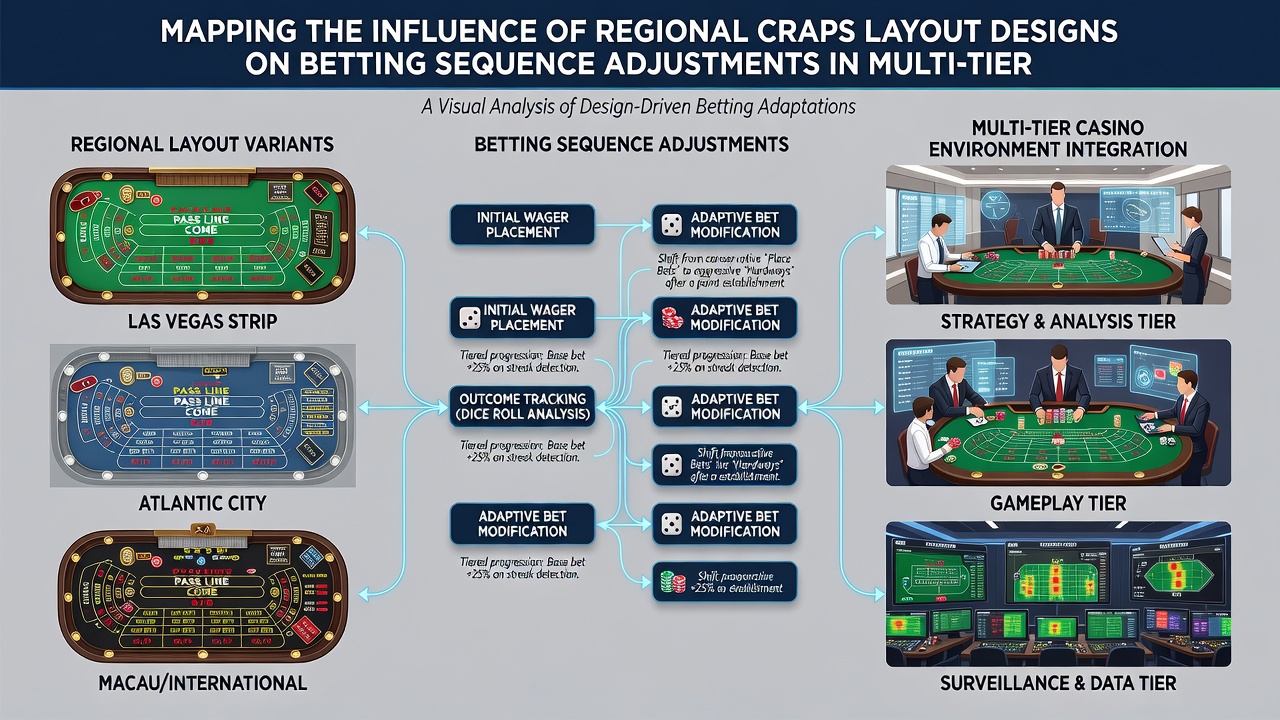
Regional differences in craps table designs influence how players adjust their betting sequences when navigating multi-tier casino environments, and data from multiple jurisdictions document these patterns consistently. Casino operators in various areas configure tables with distinct placements of betting areas, stick positions, and rail designs that alter the flow of wagers during a single turn at the table. Researchers tracking player movements across floors with stacked gaming levels report that these physical arrangements prompt measurable shifts in the order and timing of bets such as pass line, come bets, and odds placements.
Layout Elements That Drive Sequence Changes
Craps tables in different regions feature variations in the number of betting boxes, the width of the rail, and the positioning of the stickperson relative to players, and each element correlates with adjustments in betting order. In facilities where tables place the proposition bets closer to the shooter, data indicates players insert these wagers earlier in their sequence compared wth layouts that locate those areas farther away. Multi-tier casinos amplify the effect because vertical movement between floors exposes players to repeated encounters with differing configurations during a single visit.
Studies conducted through 2025 and into August 2026 show that tables with wider rails in certain North American markets slow the pace of side bet placement, leading participants to complete base bets before adding additional wagers. Conversely, narrower European-inspired designs allow quicker transitions between primary and secondary bets, according to observations compiled by the Nevada Gaming Control Board. These physical constraints create predictable sequences that repeat across sessions when players encounter the same regional layout repeatedly.
Multi-Tier Floor Dynamics and Player Adaptation
Vertical casino structures introduce additional variables as players move between levels that may house tables from different manufacturers or regional suppliers. Observers note that individuals often modify their betting cadence when ascending or descending floors because the visual and spatial cues change. A player who begins on a ground-level table with standard American layout proportions may extend the interval between come bets when reaching an upper tier that uses a compact configuration.
Industry reports compiled by the Canadian Gaming Association document similar adjustments in properties with three or more gaming levels, where traffic patterns direct participants toward tables with specific rail heights and box arrangements. The sequence alterations appear most pronounced among repeat visitors who develop familiarity with each tier's characteristics over multiple trips. Data collected during peak hours in August 2026 further revealed that these adjustments stabilize after two or three floor transitions, suggesting players calibrate their approach based on accumulated spatial experience.
Data Patterns Across Jurisdictions
Comparative analysis of craps activity in the United States, Canada, and select Asian markets highlights consistent correlations between layout features and betting order. Tables equipped with additional proposition areas near the center of the playing surface show higher rates of early placement for those wagers, while tables that segregate those areas toward the ends produce delayed insertion into the betting sequence. Floor plans that cluster multiple tables in close proximity on upper levels increase the frequency of layout-based adjustments as players sample different configurations within short time frames.
Figures released by regulatory bodies in Nevada and Ontario indicate that average sequence length, measured by the number of distinct bet types placed per shooter turn, varies by as much as 18 percent between regional designs. These differences persist even when controlling for player bankroll and session duration, pointing to the physical layout as a primary driver. Multi-tier facilities that rotate table suppliers across levels create environments where such variations occur within a single property, amplifying opportunities for researchers to map the resulting betting adjustments.
Operational Implications for Casino Design
Casino architects and gaming equipment suppliers incorporate regional layout preferences when planning multi-level spaces because the documented effects on betting sequences influence table utilization rates. Properties that standardize layouts across all tiers reduce the frequency of player adjustments, while those that deliberately vary designs between floors encourage continued exploration of different betting orders. Tracking systems installed in several large facilities record these movements and provide operators with granular data on how layout choices affect overall table throughput.
Reports from academic centers focused on gaming management, including work affiliated with the University of Nevada, Las Vegas, confirm that layout mapping projects help predict peak congestion points on individual floors. When upper-tier tables feature configurations that prompt longer betting sequences, dwell times increase and affect adjacent game availability. Operators therefore adjust staffing and table density in response to these patterns rather than relying solely on traditional traffic flow models.
Conclusion
Regional craps layout designs produce measurable effects on the order and timing of betting sequences, particularly within multi-tier casino environments where players encounter multiple configurations during single visits. Data gathered through regulatory oversight and academic observation in 2025 and August 2026 demonstrate consistent correlations between physical table features and player adjustments across jurisdictions. These findings inform both operational planning and equipment selection as facilities seek to optimize table performance within vertically organized gaming spaces. Continued monitoring of layout variations will likely refine understanding of how spatial elements shape wagering behavior in complex casino settings.